
So one of the things I am starting to despise is maintaining finicky small gas engines and doing maintenance on them. However, when I first started this land project, there just was not that great of DIY electrical options. Now, that is changing. Solar, Battery, and Electrical is becoming much more practical, and can do things that petrol engines can’t do easily. Additionally, with my limited time, I want to be working on things not maintaining things.
And that’s why I retrofitted a used electric golf cart into a lithium iron phosphate solar golf cart.
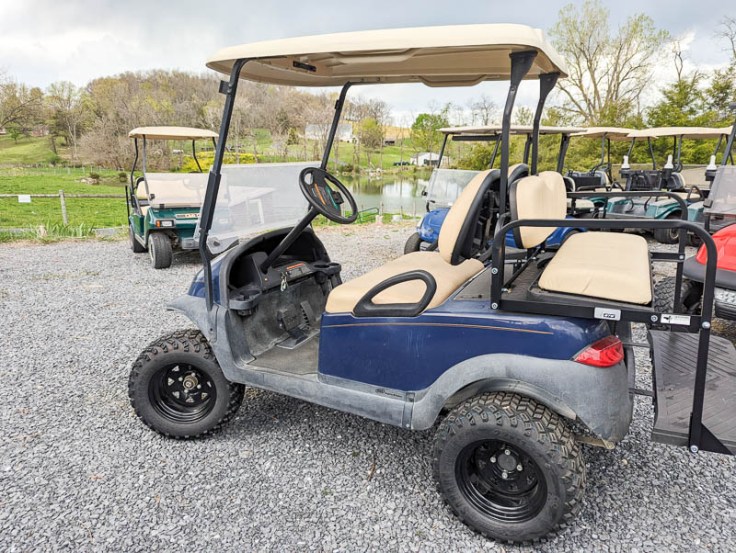
So obviously, this is weird, but the solutions meet my requirements.
- Stop hauling energy when possible, in this case gasoline.
- Focus on developing low / no maintenance solutions.
- Get a small vehicle that can be my farm work truck, but not be a truck.
- Move stuff around the land quickly, either onboard or via trailer.
- Has to be able to handle the undeveloped land as well as the steep climbs.
- Cannot be grid tied.
So with that, we are off to the races. I mean, lets be honest…. what I really really really wanted was a kei truck. They are just so awesome. Good capacity, small, good fuel mileage, cheap, minimalist. However, we can’t bring them into the United States until they are 25 years old. And even then, for some reason many states are forbidding their use. So, with the advanced age and questionable future legality… I skipped on it. 😦 Some day the United States will get a viable mini truck.

So with a traditional vehicle out of the question, it came down to ATVs, Side by Sides, and Golf Carts. Obviously one of these is not like the others. While ATVs and Side by Sides are designed for all terrain from the get go, Golf Carts are designed to be simple transport that is low maintenance. But the problem is, they aren’t exactly mountain friendly. That’s changing. Quite a few different different after market mods are available to put a lift on a golf cart, as well as all terrain tires. Valley View Golf Carts already had a bunch of used golf carts for sale, which already had a lift, and all terrain tires mounted on it.
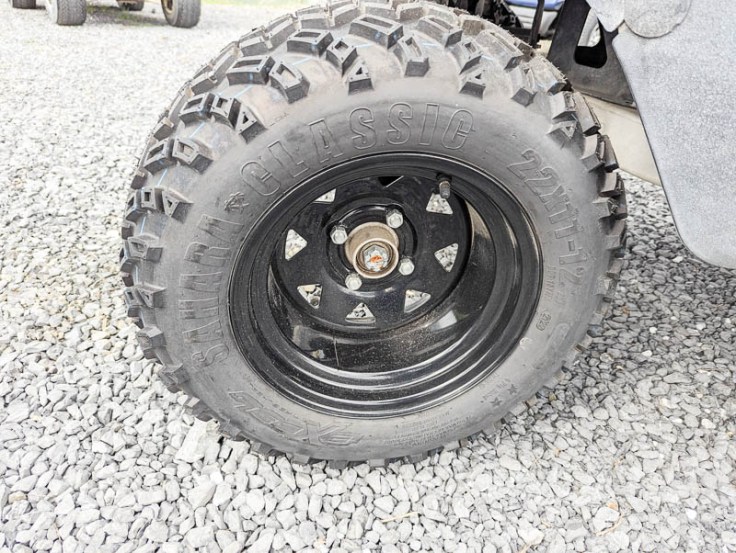
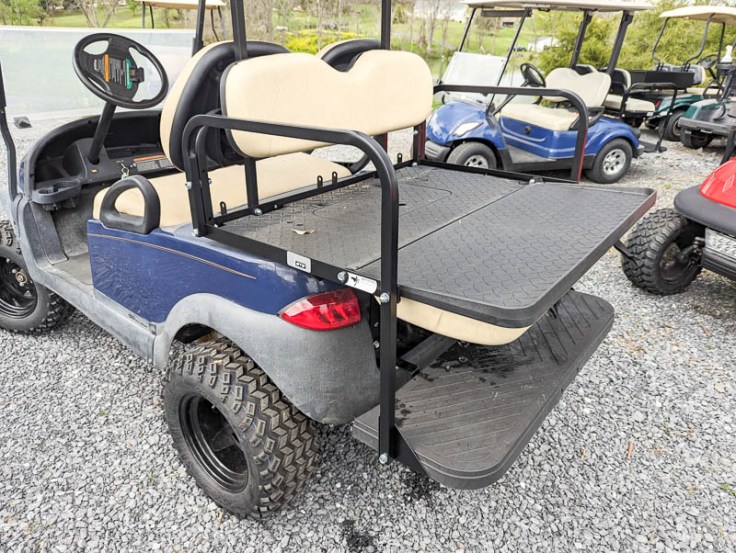
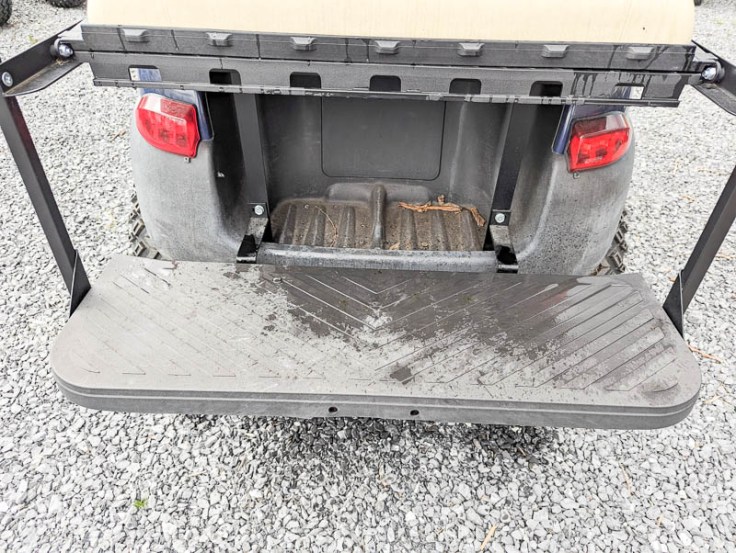
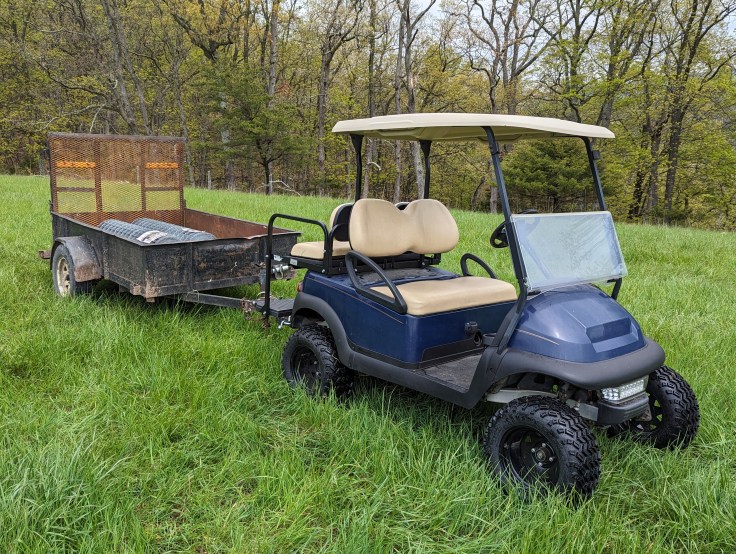
In looking at the inventory, I found a 2018 Club Car Precedent for sale in my area that already had the lift and all terrain tires put on it. It was already running 48 volt DC, and it was for sale for $6,500. Sold, and they also threw on the hitch for towing. Bonus, the back seat also doubled as a flip down “truck bed” so I can either move people or things. Perfect.
There is also a helpful drop down cubby in the back.
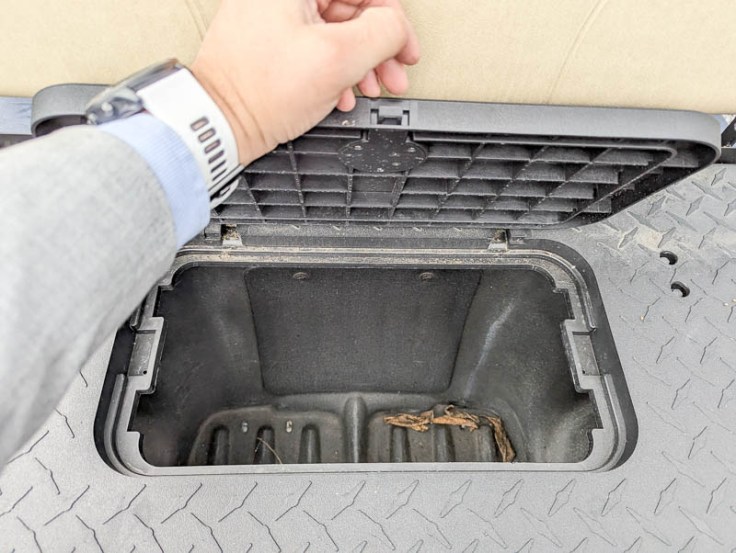
But its more of a vertical thing because there is no back on it.
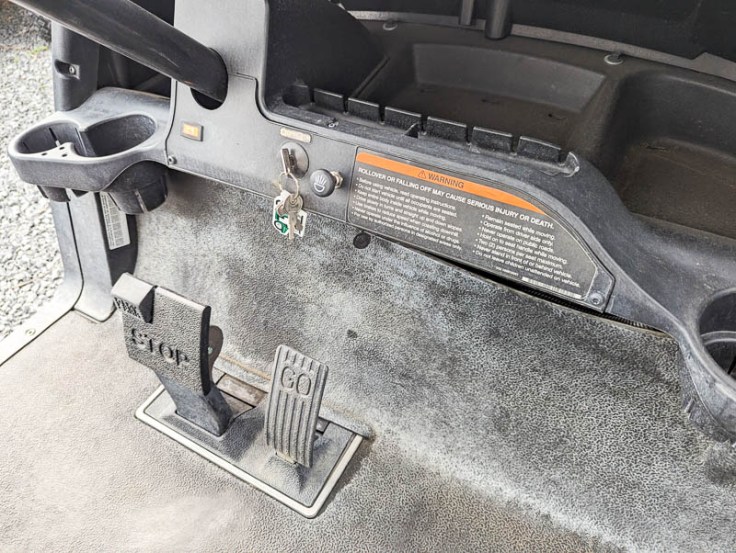
Its a pretty simple drive mechanism. “Gas” (forward), brake. Forward Reverse. That’s pretty much all I need.

So at this point, its pretty much everything that I wanted and needed from the start. However, there was still going to be some more work to go to get it into final state. First challenge, get it from Virginia to West Virginia on mountain roads. For this, I went to my trusty rental spot and rented a trailer for the weekend (I don’t see it on the website any more, but it was very affordable to rent). Unfortunately, I probably should have gotten a trailer one size bigger. Because of the balance of the golf cart in the trailer, it was super wobbly. Couldn’t really drive it faster than 50 mph (80 kmh). In retrospect, I think that loading the golf cart backwards into the trailer would have been better.
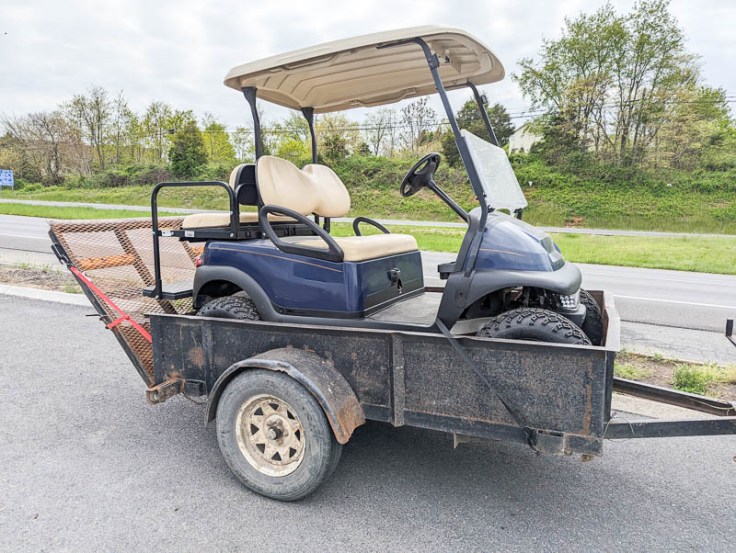
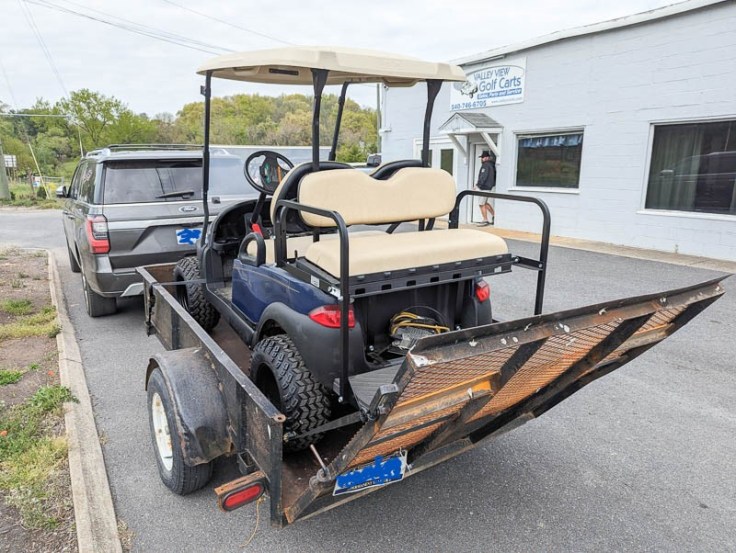
After a treacherous ride into the mountains without incident, finally got it into my land.
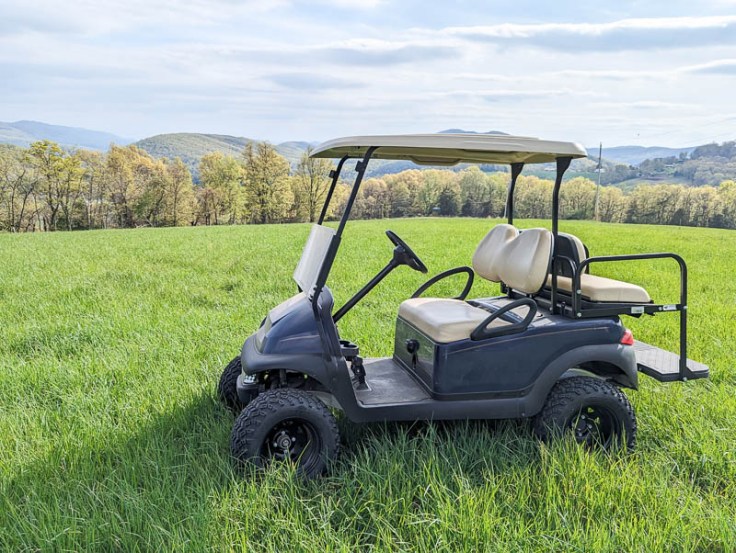
All this was just part one. We now need to get into part two to finish off the requirements. The biggest issue is that it was grid tied, and not maintenance free. The biggest issue is that this cart runs on lead acid batteries. While lead acid batteries are better than gasoline engines… I certainly don’t like lead… or acid. Or the fact that they are not energy dense and can be difficult to get a good amount of power out of quickly. That makes for an issue when you need power to get up a steep hill quickly, with a load. That’s just not going to cut it. So… time to remove the batteries.
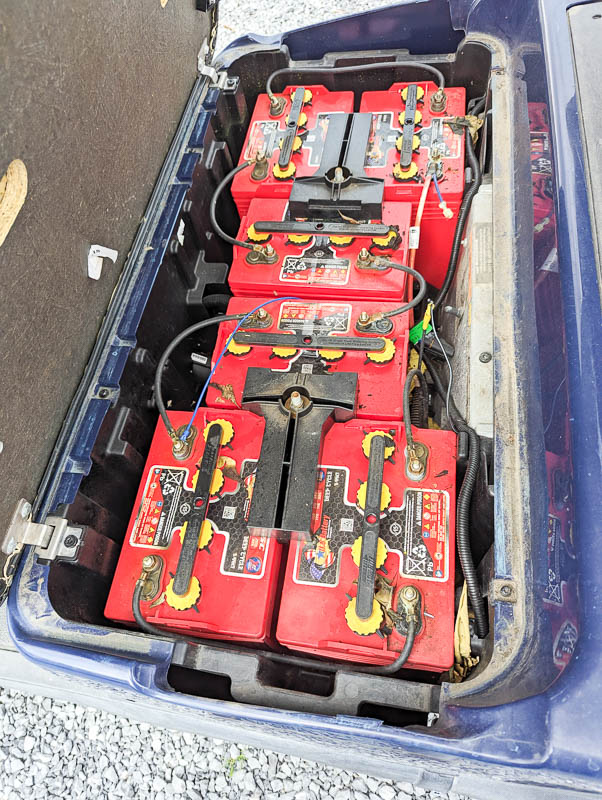
As I got started on this part of the project…. NOPE. Safety stop. All stop. Fortunately it hadn’t been cleaned out and I noticed that some of the leaves in there had a strange color. I had a suspicion that there was a battery acid leak, and being super remote and doctors being far away… time to get smart-ish. In previous experience with sulfuric acid, I noticed that you can quickly figure out if there is a leak by touching a surface, taping your finger on your tongue, then flushing immediately with water on finger and tongue. Consider this not approved, but a good farm tech test. It does take some time for acid to start to do damage, and an immediate flush will take care of the acid. So I had a bunch of water standing by, did the test, acid confirmed… flush. Yes, there are better / safer ways to do this, but that would take a significant amount of time to get the right tools. So, grabbed the rubber gloves and started the process of removing the batteries. Again, I never trust lead acid batteries because of lead, and acid.
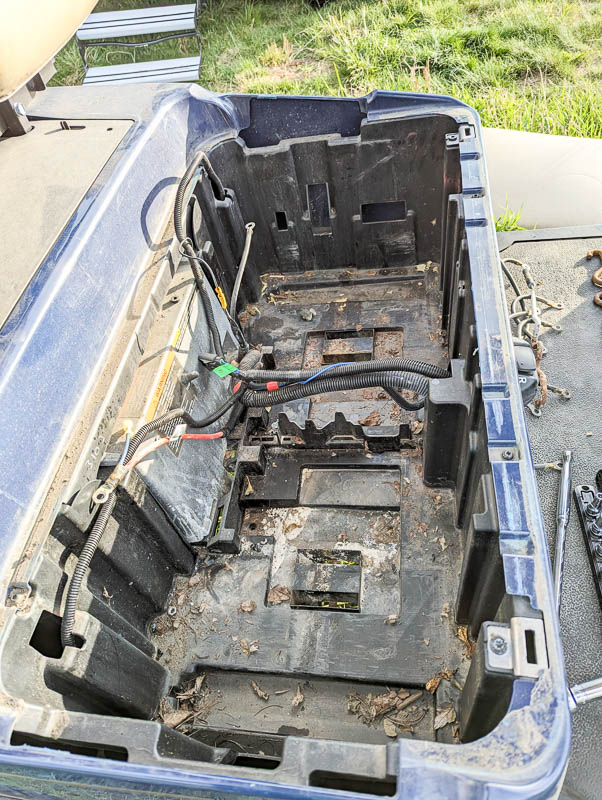
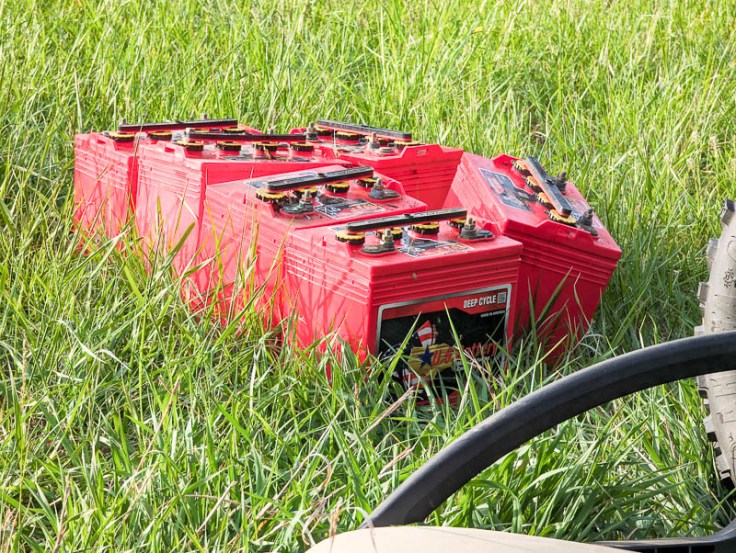
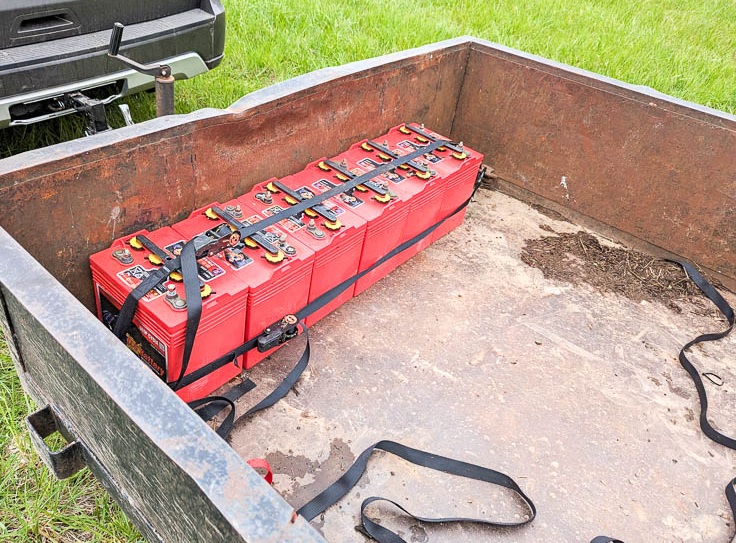
So with the batteries out of the batter compartment, it was time to get them rinsed off and prepared for recycling. In this case, they weren’t recycled. They were returned to valley view so they could fix them up and reuse them. That’s even better than recycling.
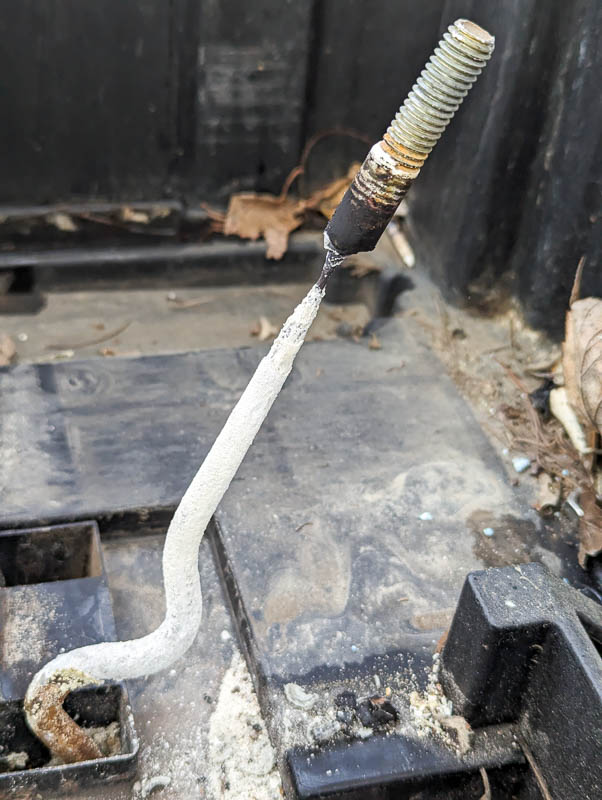
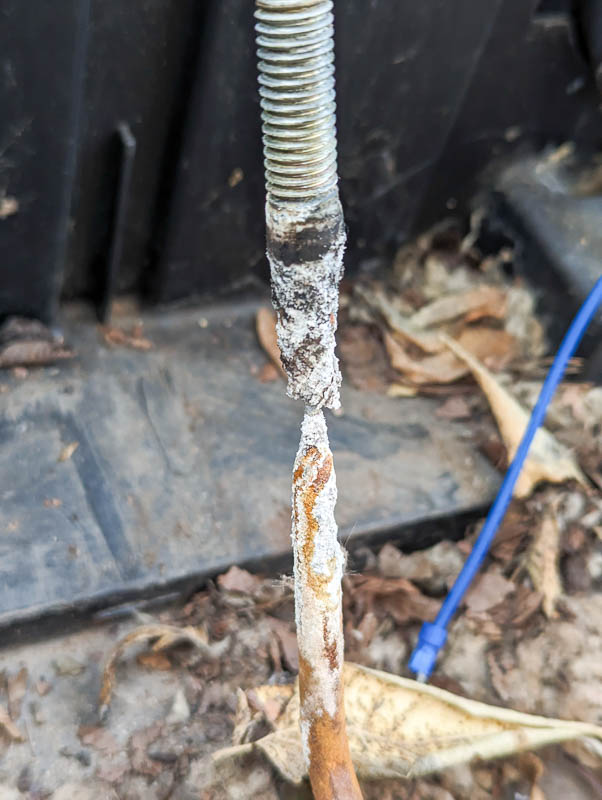
That said, upon deeper inspection, I saw that the battery anchors had basically been eaten away by the battery acid. Did I mention I hate battery acid? Yea. Don’t use lead acid batteries any more. Anyway, fortunately I won’t need the battery anchors any more.
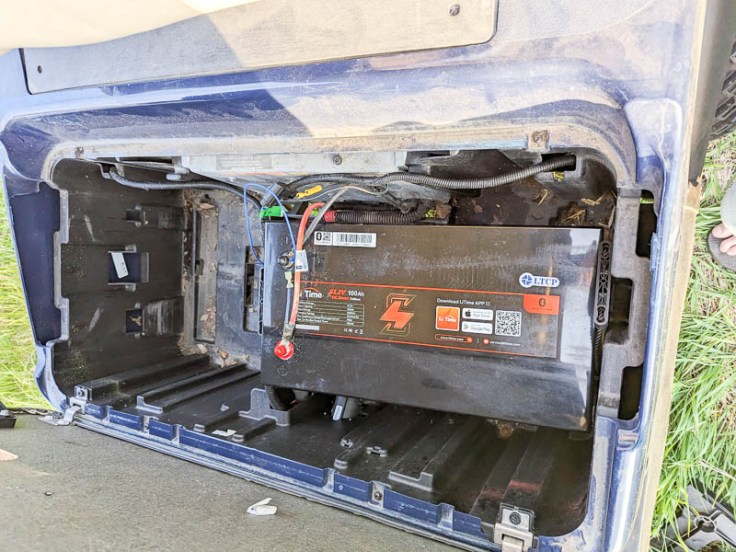
So with that, lets get some new electrical in there. The first thing that I did was drop in a li-time lithium iron phosphate battery. Pretty much everything I am doing at this point is moving towards lithium iron phosphate (LiFePo4). The simple reason, is that its extremely low maintenance, they last for more than ten years with every day use, great power delivery when you need it, and much lighter than lead acid. As opposed to lithium ion, they are much much safer and don’t have the risk of catching fire with normal or abused used. Only draw back… don’t charge them when its below freezing (but you can put a heater on them).
So about the battery (read: here comes the nerd stuff). This is a 51v, 100 amp hour battery. I hate that everyone runs in volts and amps still, just understand that it is 5100 watt hour. So in other words, you can power 1 kilowatt device (think a microwave) for about 5 hours. In other words, this is a lot of battery storage. It costs about $1200 for the battery, but this is way cheaper than what I was doing with AGM solar batteries back in the day, and they last longer. Additionally, it can discharge 5 kilowatts of power all at once, sustained. So for a golf cart, that’s going to move you around the land and up the hills without hesitation.
So now that the battery is in there, need to get a way to charge it. But I still don’t have (and don’t want) grid tie power. So I gotta build power for this. That’s why I dropped in its own MPPT solar charge controller. In this case, I wanted to go name brand and get good results, so I used a Victron Energy SmartSolar MPPT Charge Controller (Bluetooth 100V, 20 amp, 48-Volt). This allows me to plug the golf cart directly into solar panels to recharge the batteries after use. One note: make sure you have a couple of big solar panels to make a minimum of 48v of DC power into the solar charge controller. Otherwise, the Victron won’t charge, and that’s one of its drawbacks. However, I still have two big solar panels from previous projects but I was lucky. I wasn’t expecting that minimum voltage requirement.
Seeing as I had all this extra power in the battery, I decided to put a no-name 48 volt inverter as well. This inverter will get me 2000 watts of power, anywhere that the golf cart goes. This is a huge bonus. Its like having a generator anywhere I go, and 2000 watts is 2.6 horsepower. That’s quite a bit of energy that’s always available. Because of this, I am now getting rid of expensive smaller battery powered devices (think dewalt tools) and moving everything to AC power. AC power tools are much cheaper, and now I only need to maintain one battery.
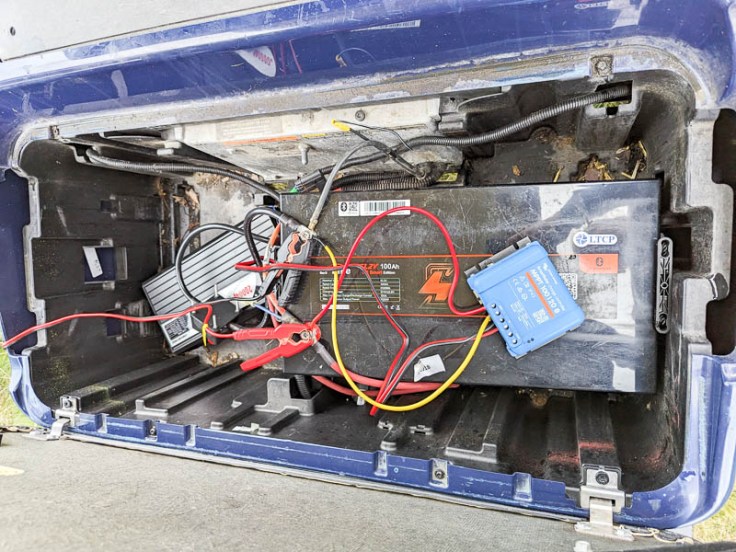
Because the original system was rated at 48v and the newly dropped in electrical was at 51.2, its slightly over voltaged. In theory this should slightly damage the electronics, but not really in practice. However, what it does do is provide a performance upgrade over stock equipment. However, why stop there? In the future I hope to change out the golf cart controller and motor. This will make it go about 35 mph (55 kmh), better on towing, and better on the mountain inclines. However, we are doing just fine on the mountains.
But speaking of towing… yea, already used the rental trailer to move around a bunch of new fencing for a new project (that I unfortunately haven’t gotten around to yet).
 Vantages From Vandalia
Leave a comment